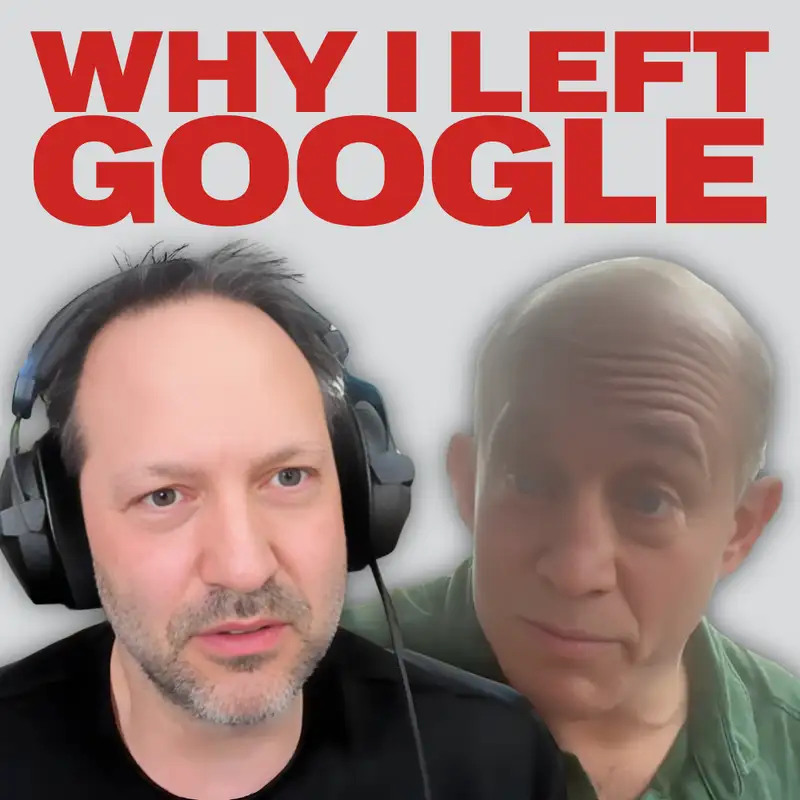
From Google to the Grill: Dan Gertsacov on Career Fit and Leading Big Green Egg
Jason Baumgarten
[0:00:00]
I'm Jason Baumgarten and you're listening to Fit Happens, the podcast where top leaders, investors and board directors share the stories, surprises and hard earned lessons behind finding the right fit. Let's get into it. I'm here today with Dan Gertsacov, the CEO of Big Green Egg. Dan, I'm delighted to have you. Welcome to Fit Happens.
Dan Gertsacov
[0:00:25]
Thank you, Jason. It's great to be here.
Jason Baumgarten
[0:00:27]
Well, first of all, Dan, you've had an unbelievable career and I'd love to start. I usually start at the, at the early days, but I'd love to just start with tell everyone about Big Green Egg.
Dan Gertsacov
[0:00:37]
Yeah, it's well, well named your podcast the Fit because Big Green Egg is really a fit. This is my fourth career over the last 25 years and really a combination of my first three careers and that's why it's such a great fit. Earlier in my career I did nonprofit. I was a social entrepreneur. Big Green Egg is going to be owned by a foundation like Newman's Own or Patagonia. So there's a big social component to it. Second part of my career is at Google as a digital tech exec and doing mostly growth and transformation of old school industries and kind of adapting to change. That's exactly the challenge I've got at Big Green Egg, which is a 50 year old company, really well positioned among its community and it's got to be more inclusive to a younger generation of folks that want to grill for their family and friends. And then finally food. I've had a hobby around food since I was a teenager. That was my first career aspiration to be a chef until I went to culinary school and realized being a chef wasn't the lifestyle I was, it wasn't a fit. But I wanted to be closer to food. So over the last 10 years, my third career was in the restaurant industry. I'd gotten into both large scale franchise operations with McDonald's and then on the franchisor side with big private equity that was investing in restaurant brands like Cinnabon and Jamba Juice and Auntie Anne's. So those three careers kind of, kind of when you do a Venn diagram of the things that overlap, that's Big Green Egg for me. It's a purpose driven company taking an iconic brand and kind of refreshing it for the next generation of customers with a context in and around food as the anchor that brings community together.
Jason Baumgarten
[0:02:12]
Talk a little bit about your passion for food. I mean, it's so singularly unique in your story. Where'd it come from yeah.
Dan Gertsacov
[0:02:20]
So I think like a lot of people, like, you know, every holiday gathering was around food. Growing up in my party as a teenager, 20 something ends in the kitchen. There's always an element of food that you kind of grow up with. My story, and this is a personal one, I was like many people had a unfortunate situation. My father passed away when I was 12 years old and as a result I started cooking. My older brothers were out of the house and I started cooking as a 14 year old. For my mom, I thought this would be a way to kind of lift her spirits a little bit and have something for us to connect to. And I started going deeper and deeper and there's a need for kind of constant learning. When you make something, it's like, well, I could have make it out loud a little bit more this time. That time, which was really attractive to me as kind of a type A. And then the other kind of cultural exploration and trying to understand different places or also pleasing people. Like you bring something, a potluck to an event or a family gathering and people like, wow, I really like that, that kind of positive affirmation. So I got hooked. And you talk about fit. I'll keep coming back to this because I went, that was my first career aspiration as a chef. And I reference I went to culinary school. In this case I went to Thailand. I had this adventure sequence played in my head. I'd go and become a Thai chef. And I went there in my early 20s and was in over my head. 18 hour days where people are real chefs and just getting a specialty. And I was there kind of, I like to cook at home. So I was in over my head and I worked really hard to kind of pair up my skills. But I realized that that lifestyle was not a fit, that I enjoyed cooking and traveling to learn about food. But I could do that as a hobby. I don't have to do that 50 hour days. Like there's other people that that's fit for. So I kind of left it as a hobby. And I mentioned my type A, I was 22 years old. I set a life goal thinking, look, I get a vacation a year at least. I'm going to take one vacation a year and when I'm 72, I'll have learned 50 cuisines. So 50 years, 50 cuisines. And for the last 28, almost 30 years I've been after that and doing it pretty consistently and actually accelerating because rather than spending or having the luxury to spend a month in a place that I did, you know, when I was in grad school or something, in transition, I'll spend two days in a place and I have been able, as a result of making them just like kind of a two day experience. I've accelerated them where I hit my goal for 50 this past summer and I've reset my goal.
Jason Baumgarten
[0:04:48]
Congratulations.
Dan Gertsacov
[0:04:49]
Thank you. And like a good type A, I reset my goal to 100. I kind of made a quick celebration because this is the kind of thing that I can imagine doing forever and now, although I'm not a, you know, CEO of a green egg, I'm not a chef. I'm in and around food and that doesn't, there's a lot of play when I get that as a career question, like, oh, I want to be in sports. Well, look, it's 1/10 of 1% of 1% that get into sports. But there's a lot of people that work in sports teams that are sports agents, that are sports media that are sports marketing or sports finance or sports lawyers. You can take any profession and anchor it in around the thing you're interested in. You can find that thing that makes you happy with the function that may be a better fit.
Jason Baumgarten
[0:05:32]
Often think about CEOs as people who never failed at anything and boy, they must have been perfect the whole whole way along. And the reality, as you and I know, is that most CEOs, and many of the best CEOs actually had some pretty spectacular things that didn't go well because that's the things that they draw on, the strength, the learning that they draw on. I'd be curious whether it was the chef school or something else in your career where you just weren't crushing it. And looking back, you're like, it actually wasn't a fit. Something wasn't right about the skill set match, the, you know, temperament match, the passion match where you were, you know, what, what wasn't right.
Dan Gertsacov
[0:06:12]
Yeah, I have had multiple, I mean, multiple failures or multiple fits that felt good for a period of time and then the situation or I change or evolve or adapt multiple times. So that that's a fallacy. I think it's the people that you could probably mark, the people that learn, the their failures are the ones that end up in the CEO seat, not the people that never fail. And I can, gosh, I mean, I don't know where to start. I've got a senior apply to college. So let me just talk about, you know, my most relevant one. I got rejected. I applied to eight schools and got rejected in my top six. I was a good student with good grades and good sports, but not spectacular at any one thing. I didn't really have the maturity until really my senior year in high school to really pursue excellence. I just, I just bloomed late in that regard and as a result I thought I'd get into all these schools that I didn't get into. And I went to what was a great school and at the time I thought I was settling and then I went there and this is the thing you don't know as a 17 year old or 18 year old, it ended up being the best fit it could have been. I went to University of Richmond, a small school in Virginia, liberal arts. And I was like, oh, I'm just going to go here for a year and then I'll transfer to a bigger school. I spent the summer at Cal Berkeley saying oh, I'm going to. And I went there. I was like actually this is not a fit. I like my small school and I can be a bigger fish in a smaller pond. And I was on the leadership opportunities at a smaller school that I would never have gotten at a UC Berkeley. I was on the student rep to the board of trustees and I captained the rugby team and I did the fraternity. I did all of these activities that are easier to do in an environment that enables it than it would have been in a larger. So that's an example where what you my perception of what success or failure was the adaptation to fit was very much so. And then staying close to it. I'd also use my first. Over my career there have been six different moments where I have taken between two opportunities. I have taken the opportunity for less money that on the surface and with my, you know, kind of family mother's advice, particularly like why are you doing that? Coming out of college I had an opportunity to be an investment banker. I had a Fulbright scholarship. Investment banking much more lucrative the Fulbright, much more closer my interest in corporate social responsibility and, and I ended up taking that option coming out of grad school or yeah, I had an opportunity in the kind of typical consulting world and then I, I took what was very unlikely for an MBA. I took a sales job which out of the gate was a low base and everything invariable and media and people like why would you do that? You have such an opportunity, you could transition. And then multiple times when I left Google, when I multiple times the priority around money was in the camp. I'm not going to been a volunteer in my career. But it was not, I was not the primary filter. And as a result I've had a non linear but ultimately connected career between these things as a social entrepreneur, as a tech exec, as a food exec and now doing what I'm doing here. So there is a line to draw through them and. But it's not obvious except to you in the moment. And if I had based that on what other people perceive or just on a financial decision alone, I think I would have ended up in a situation that wouldn't have been a great fit. So I think fit has been a driving theme in my career.
Jason Baumgarten
[0:09:48]
It's such a good example. I find, you know, people explore different things especially early in their career. Often when somebody's interviewing them or getting to know them, they're trying to figure out what does all this stuff have in common. I always remember telling somebody they're the thing that's in common, right? They're the through line is the person. But what's so hard is often figuring out for you what is that North Star you're trying to get to. It sounds like you figured out very early that financial reward was in the mix but not at the top of the mix what were the things you did to try and understand better for yourself what really mattered. And you know, that's a really hard thing especially early in career for somebody to go boy, this is really what I'm solving for. This is my non negotiable.
Dan Gertsacov
[0:10:41]
Well, I came across a concept earlier in my career that I've been tinkering with and meddling with and reflecting on throughout my career. It's not something you just like, like a good book, you can read it multiple times and come out with a different interpretation every time. And the concept is called ikigai, which is a Japanese word, literally means in Japanese a purpose for life. And it's generally depicted as a Venn diagram of four circles. What you love to do, what you're great at, what the world needs and what you can get paid to do. And that middle thing, that middle overlap is the ikigai. Now my reflections on I don't pretend I'm going to improve on Japanese philosophy, but I actually think that the term of life's purpose is misleading. I think it's not a life purpose but kind of a phase or a stage purpose I've had. This is my fourth ikigai in my career where I've been completely obsessed and focused and there's nothing else that I wanted to do for my self knowledge about what I'm good at, what I love to do, what the world needs and what I can get paid to do. And so it is a thing that moves and evolves because your knowledge, example of what the world needs is different at the different stages and phases of your life or how much travel you've done or study or the people you've learned from. And similarly, what you can get paid to do, I can say and you know, this is something I deal with all the time with, you know, hiring kind of people right out of school. They're like, I'm ready to be a VP, like I'm ready to do it. And I was like, you're not in a position to get paid to do that. You don't have the experience, you haven't seen the pattern recognition. There's a lot outside I see that there's something you're really good at. You've got that circle, but your exposure to these other circles is less so. Right. So I think that it reflecting and this is the different for me has been I've used journaling over my entire literally since college. I got a travel journal when I graduated college and I've used that now other journals and Google Docs or whatever it may be. And that reflection space of actually saying, no bullshit, I'm gonna look in the mirror, what am I really good at? Not what I say in an interview, not what LinkedIn, what am I really good at and what I'm. My skill set of the last 30 years has been being a step, but not three steps ahead of what's about to happen. So corporate social responsibility. When I got into it in 1997, nobody was talking about it. It was not a topic. It was a couple of small companies, Ben and Jerry's and Tom's of Maine. A couple of bad examples, Enron and other. But it wasn't like a field, there wasn't a space. But it was becoming one. And I got involved kind of on the ground floor of that and for Latin America at least, and contributing to global. And when I felt that my learning had transitioned, that's when I knew the fit. You mentioned that earlier. Like it's been. I spent five years of my life dedicated to this. I would read it on Saturday mornings, I'd be thinking about it all the time. And at five year mark I was like, actually I'm giving people advice on how to run a business. I've never run a business and I have the idea I'll learn how to run a business in business school. It's not exactly the case, but I thought it was and that was my next career move was around digital. Like I got to Google shortly after their IPO. Digital was 4%, 5% of the ad spend and it was gone. If you just looked at the, you know, look at the technology but just look at the adoption rates and so forth, it was going to be 50, 60, what it's become. And I got in early on that stage. I wasn't the founder of Google, I wasn't in the late 90s working on it, but I was earlier enough to be part of that whole wave. And I was kind of the tip of the sword there and then on restaurants and my, my, my foray in restaurants. Restaurants been along for a long time, but I was on the digitalization of restaurants, right? So that's what I did at McDonald's, that's what I did at Focus Brands. I was on like, hey, maybe we should make it available for delivery or order on a phone or keep, you know, a kiosk in the restaurant. I was on the front end of that before. And other people like what is a chief digital officer doing in a restaurant? That was, you know, a risk at the time. It would have been easier to stay at Google. I turned down a job at Google to leave and in this case not going to restaurants. I did a startup. But that was like a non, you know, at least a non linear or a non obvious decision but it felt right on the fit side. So I would, I think that, that we're coming back to a guy that reflection and you setting your not only the priorities but your look in the mirror space which for me is journaling and to really push yourself on those topics, like no bullshit. What am I, what do I love to do? And they're different. I love to play golf. I'm not very good at it. Not many people get paid to do it. And I don't even know if the world needs another golfer. Not a hobby, but not a profession. Right. So I've been able to create the, or try to take that construct and apply it to myself. And I think that reflection space, especially in today's world is really a necessary component for people coming out of college, getting their first job thinking about that aspiration in doing that kind of not how good am I now? But what kind of learning environment can I get into so I can discover more about what I'm great at, what the world needs, what you're good at and so forth.
Jason Baumgarten
[0:16:15]
It's such a good framework. I. You've probably noticed every month I put three book recommendations on LinkedIn and this year a friend of mine said, why don't you put your, you know, your, your year ahead books, you know, ten year ahead books. Oh, that's kind of fun. One of the books was about this exact concept and it's such a good framing for people to. I always like the external and internal view because I think a lot of people think, well, I love doing this. And that extra lens of does the world need it and will they pay for it is so important because otherwise it's a great hobby. And on the flip side, you mentioned something about looking in the mirror and being honest with yourself about what you're good at. It's such an important thing because I think especially the longer people go in a career, the easier it is to, oh, well, everyone tells me I'm good at this. Well, okay, but are they really being honest? Are you really, you know, is, is that really your thing? Is that your superpowers, I like to say, or is that something that is not that, you know, you're pretty average people are just being nice to you? You know, everyone always says when you become a CEO, you get better looking funnier, et cetera, et cetera. I want to talk a little bit about fit on teams because we all, you know, we. You've talked so eloquently about fit in your own career, your own journey. One of the things we've realized is that when you have the right person in the right job, in fact there was recently a study done that, that the number one skill of high performing managers are people who can put the right person in the right job to be done. And I'd love to hear a little bit about your own journey as a manager, as a leader, because sometimes we have a person we love but we put them in the wrong job, sometimes we haven't worked out what the job is and we, we get the match wrong from the other side. So I'd love to hear some adventure lessons in, in, in the team side.
Dan Gertsacov
[0:18:09]
Yeah, I've had. This is a good reflection point because I've both been as the, the person. Like the individual contributor on a team and how that's played out and then getting, if an individual contributor goes, well, you become a manager something in those situations and, and how that sometimes works against you as a manager. So I, throughout my career it's been persistence as my, my superpower has been dogged persistence. Right. So I, and that's another reflection and that's. I, you know, you have to be. If you're trying to sell something that's a step ahead of whatever the people of everybody's like, yes, that's philanthropy. I'm not interested in it. And I'm convinced no, this is how you run a business. You have to be persistent to be able told no a hundred times and continue on. But that persistence can be overwhelming to others and it can be off putting if you, you don't mire your persistence or not mire, but, but kind of connect your persistence to a, to a, a subtlety or a comment. Like, how much do you follow up? Like the worst way if you're in. I was in sales all my career. The worst, the best and worst way to land a deal or be successful in sales is the pace of follow up. If you do it too little, it'll never happen. If you do it too much, you're going to get ignored or worse, they're going to, you know, turn you off and never take your call. So getting that balance right was something I had to learn earlier in my career and I don't think I got it right out of the gate. I also as a manager have had to learn and again, a lot of these are the subtleties here of like, it'll take you so far, but not all the way on some of these. So as an example, I had to learn that different people require different, more things in your backpack to use. Some people want the incentive and the recognition and you use that as a manager to really get them excited. And for other people, that's exactly opposite what they need or want to. And if you've only got one golf club in your bag, you can only, you're only going to be so successful so you have to develop other golf clubs. I'll keep with this analogy. I would also say you cannot if you are a great putter and you're, you're not going to get a win a long drive competition, you shouldn't sign up for a long drive competition. I've also learned to stop myself as an example. I do really well with people who have played competitive sports and are really like, have this energy, this kind of similar dogged persistence. And I, they, I as a manager, they respond well to me, I respond well to them. I can do. I'm an okay manager for other people that don't like that. But I'm not a great manager. So what I've done is I've layered and as I've grown in my career, I've layered other people and remapped other people so I don't become the direct manager for some of the people that I'm or part of it is hiring. Right. So maybe not hire that person if it's not going to be a good fit. But there's other times where you have somebody, they are great at their job, they are good, they're just not going to respond in the same way to your management style. And I think reorganizing the organization to do it is the best way. My playbook around what I've done over my career and it's been with pattern recognition has worked consistently is a three step process. Direction of the bus, where are we going? What's the destination? Why do I want to get on this bus? There's a why to the direction. Then there's seats on the bus. That is a critical component to transformation and it's the org design within but also who you're going to use outside. If you're going to say no, we're going to create an internal agency versus using externally. That's an org design. And that org design is a piece of the probably I would say the most critical part especially of a turnaround situation because things aren't going well and people need to look to their leader or look to somebody for direction. If they're looking at the wrong person or pointing the wrong direction, they won't get there. And then finally people to fill the seats on the bus. Right. And that's the piece. But if you hire a great person but for the wrong seat, you will not be they and you will not be successful. So over my career it's been this like your strength taken to excess can become your weakness. I've had to learn how to take my strength up to its limit and then stop and not allow it to take it to a weakness. So mitigate it. Not to deny that it's bad that I've got a competitive, you know, rugby energy and that's, that's one of my strengths. But if I go with rugby energy and that turns into bull in a china shop, that's when it's working against me. So I've had, I didn't know that as my 20 year old self or 25 year old self that's come in my, my 40s and early 50s here.
Jason Baumgarten
[0:22:56]
Dan, how explicit with your team are you? How much do you share these things with your team versus let them discover it as they go.
Dan Gertsacov
[0:23:04]
If it's a scale of 1 to 10 and 10 is as most upfront about you can be, I'm an 11. So what I do literally before they're even on the team, when we have a we have, we kind of go through a hiring process I learned at Google and have replicated in other places because you have to be thoughtful, like a UI experience. But for what's the employee or recruit experience for that. So we get to a finalist round of two or three people, right, that we're going to bring in for interviews and we give and we require this, an exercise for the person to work on. And it's very important that it's crafted in a way it's an hour max, an hour or two. If it's 10 hours, it's unfair. If it's not a good question, it's not a good match. So it's a good street. It gives a person an insight what it's like to work there, gives you an insight of what they're like outside. And I have no issue like, oh my God, in the world of AI, I take home exercise. Good. Because they're have to use AI when they get in the company anyway. So we're testing how good they are at AI. I don't know. So but any case, in that question there are only three questions. One about our strategy, one about the function. So if you're in sales or marketing or whatever it is, the third one, and this is not only for me, is now for everybody in the company. You say, I'll share with you after the format. It says, research has shown that success in a job is directly related to your relationship with your manager. As a result, I'm going to preface what I'm like as a manager. Here's some bullets. The good and bad about Dan and I ask you to tell me the good and bad about you. So not only do am I upfront, I'm up front with finalists who don't even get the job that I am can be. I have physical energy, I'll pound the table. And that is I'm working on my body language. That's a thing that I need to work on and it's something I continue to work on because my energy comes through. But it can be intimidating. So I tell people it's not an excuse like I'm just going to do it. I'm trying to get better at it. But I let people know. I let people know as an example that I one of my biggest pet peeves is when somebody comes in and says, well, this is going on. What should we do? I literally at Google had to put a. I was in Argentina doing a turnaround at Google in Argentina and I had to put a sign up on my door that said don't come in with a problem that you don't have an alternative solution for because it was easy. The structure of, you know, the boss the jefe to the team as the boss decides and we bring them the issues. And so I tell the team up front, I want you to come in with two or three scenarios. I can give you feedback, I'll ask questions. Ultimately, maybe it is my decision or it's your decision, but you're closer to the problem than I am and I do not want to have to come in and relearn your job when I'm trying to do my job them so that is up front and if that turns people off in the interview process, awesome. They should not. We've just saved them a bunch of time and us a bunch of time. I give my leadership profile up front. I've done a Spencer Stuart one, I've done others. I give my leadership profile up front. I'm an ENTJ like, like to the right. I mean until the bullet and you can map what you are and whether you'll work out. I think those things are traditionally have been pretty, you know, at least some of them. The Spencer Stuart one's better. But I am upfront about that like an open book. And I hope to catch that in the interview process where they're like this is me or this is not me. And then, you know, we get into it now what I found is people are still positioning like their reflections on themselves usually don't talk about their weaknesses as much as I talk about mine. I'm in a position of, you know, of I'm already established in the role but it is a good and it talks. It also provokes a conversation in the final interview that gets a little more real versus the kind of the positioning kind of thing. So that's what an 11 looks like in my world.
Jason Baumgarten
[0:27:02]
Well, it's such a good example, Dan. I think in recruiting especially, you know, if you're at a really high performing organization, you've got people lined up to do most jobs and it's more about which one's the best fit. The problem is, and I go back to this because of your college example. Colleges have now fallen into this trap where they're all just trying to get as many applicants as possible. And the challenge is if you're at a company that isn't getting a million applicants or a college that isn't, you don't just want more, you actually want the right fit. And the trick when you're hiring is not just, you know, don't just get the person who's, who seems like the best, but the person who really is the best for what you need because that's also better for them. You know, it's going to be great for the company, it's going to be great for the team, but it's also better for them. And I appreciate how deeply you think about that because a lot of people don't. And even if you're interviewing, it's really hard to have that self awareness because I think people have been trained and conditioned to not want any sense of failure or learning. They actually just want people to present. And we've been, you know, you go back and read what should you do in an interview book and it all says, well, don't really talk about your failings, talk about everything with a positive lens and spin it. And the reality is that's not, that's not human, human life. I mean, that's not how it works. And so I think that it's so refreshing to hear a CEO say no, I want you to, I want you to sort of bring with some real self awareness what works for you. Because if it's a fit with my energy, my style of management, we'll get along great and this will be a fun adventure. And if it's not, let's not do it. It's hard, especially when you kind of want a job, but you realize it's not a fit. You know, you like the idea of it, but the reality of it's not so good. It's like your cooking school example. At some point you're like, boy, I love the idea of being a chef, but the reality just isn't, isn't landing. So what do I do next? What's a skill you thought mattered? You've touched on a few of these. But is there a skill that you thought really mattered a lot earlier in your career where now you're like, like, I don't think that's so important.
Dan Gertsacov
[0:29:08]
I thought earlier in my career having a wide network mattered most, like having a broad one. And it's not that it doesn't matter, but what matters is the depth of your network, then the expanse of it. I'll give you an example. Going to grad school, I went to HBS, met some of the best friends of my life there. The example is I have, I know a lot of people that went to HBS and didn't necessarily connect and make the best friends of their life. They studied, they went back, they got the credential and they moved on. And my experience of the friends that I made in business school, some of it was in the classrooms, but most of it wasn't. Most of it was in the rugby team or in the social enterprise group or in the career trek to Latin America or all the different activities and extracurriculars at the bar on a Thursday night. All of those things outside created a depth of experience that that network now is, you know, it's been very fruitful because it's beyond, oh yeah, that person was in the database. I had some random class, you know, maybe it'll respond to your email, maybe not, whatever, but you're not trading on a relationship. And that idea of the transactional nature of networking versus building a relationship and networking, I didn't know earlier in my career. I misguided. I have now really. And it was kind of, I would say midpoint of my career that I realized I wouldn't do a reach out or informational thing if I wasn't willing not only to send a follow up, but then continue to connect with folks. Hey, I saw this article. I thought it would be interesting. It's amazing to me how many people I will respond. I talked to 150 people coming out of grad school because I was trying to go from nonprofit into media and tech. And so it was a non. I had to do the network job search to be successful. And I kind of got reps at this. So anybody who reaches out from grad school otherwise that says, hey, what do you think? I'll take the phone call. And I would say nine times out of 10, they don't follow up, they don't say a thank you, they don't stay connected, they don't nurture the relationship. It was a transaction. And I think that, that I literally have told people when they say they may end with what advice do you give? I say, well, follow up to this note. Follow up. And even those that I tell what to do decide not to for whatever reasons. And it's like a lost opportunity. So I think the depth of relationship building versus the expanse of networking, that's something I think I misinterpreted earlier in my career.
Jason Baumgarten
[0:31:56]
It's such a good example. I think that one of the questions I often ask people is do you care? And they always look at me a little funny like what do you mean? I said do you actually want to get to know that person? Because if you do, it's really natural to follow up and stay in touch. And yeah, I mean you and I had lapses in our communication where you or I would go on vacation or whatever. But if you actually care, right? If you care to get to know that person and, and you have curiosity, you will nurture the relationship because it's important to both to that. If it's a transaction that you want, it will, it will just be that. And you know, it's funny, I got a book this had to have been in, you know, the mid-90s. My late mother in law sent me a book called Dig Your Well Before You're Thirsty. And I mean, who knew I was going to have a whole career in, you know, in networking and in relationship building. But she was.
Dan Gertsacov
[0:32:54]
What, your grandmother knew?
Jason Baumgarten
[0:32:56]
Yeah, and she, she sent me, she was a. My mother in law was an executive assistant at GE and she watched all these executives come and go and she'd been teacher before that. And she sent me this book and I remember reading it and the whole concept of the book was when you need a network, it's too late to form one. And so you've got to build relationships. But what I took away from that was really when you don't have a purpose for the networking, right? When you're not looking for a job or you're not looking for something specific, you actually have to ask yourself, why am I doing this? And you can't say, well, because I'm going to need a job down the line. Because you might need them, because you want to ask them to be on a podcast, right? And so you've got to be able to have an expansive mentality. And the simplest way to do that is if you like people or you want to learn. That's what it is. It's the curiosity, it's the empathy, it's the who is this person? How can I be helpful? And then the other thing I was Schwarzenegger, Arnold Schwarzenegger, wrote a book recently about usefulness. And it really resonated with me because I've always had this, you know, pay it forward mentality to networking where, you know, if you know someone or you know something and you can pass it on, it's super helpful in the moment to somebody. But it really is like the best gift you can give. It costs you nothing and it gives you joy and it's wonderful to watch great people connect. I. My favorite networking is when I can connect somebody and they're like, I. We're like friends for life. That's even better than a job. I'm like, if I can connect people or friends for life in this day and age of loneliness. That's awesome. I'm not yet in the marriage broker business but I've, I've made a lot of, especially adults who kind of stop making real deep friendships. I'll often say hey you guys, you guys just sort of will click, just trust me on this and you know, then I'll get the family photos with like, you know, the extended family and the holiday dinners and I'm like I'm so glad that that worked out but curiosity really matters. I love that depth of networking. Dan, tell me a little bit about you know, entering the CEO job. There's so many myths, there's so much generic advice being a CEO, getting in the job. What surprised you the most?
Dan Gertsacov
[0:35:24]
Oh wow, that's a good one too. So I had a situation's a little different in that I initially came, I was a kind of the, the active user who had a chance to meet with the leadership of the company and as an active user is like how come I can't buy it online? How come I can't. I don't see any innovation. Like I was like trying to raise customer service concerns, being passionate about the company. We extend, we engage in a year long friendship talking about it, you know, well you're the Google guy. What should we do? So that year finally turned into a consulting said advisory and I came in for six months to say well what should we do do? And there I really got to dig deep into the company and, and eventually the plan that I handed them of like how to grow, they had turned back to me and said well we, you know, we're in an age and stage where we're not in a position to execute on it. Would you come off the sideline and go from coach to player? So this is not a typical onboarding right where you come from. I love the company so much I joined it. That's not a normal thing, but it is in this case, right? So I love, I knew the brand, I use the brand, I had love and concerns about the brand. Then I engaged in a conversation over a period of time and then I had the space to do the work. I would say my number one learning was the importance of pacing. And I think that this is true or probably even more true when there is a, we didn't come in with a new investor, private equity, that kind of structure where they've got, got the clock is ticking and you got to run. So, so that generally sets the pacing which I think is, is ill conceived or at least that artificial can has a high beta. It can either work out or really blow up. Because the pacing for in this situation at Big Green Egg is if we go too fast with change, whether internally the team and the dynamics of the team and expanding the culture and some of those elements or externally with who like being more inclusive and having more people on the table, you can. There's a couple of great examples of brands that have done like a brand refresh and have left their, their existing consumers on looking on the outside, you know from the outside looking in saying what's going on there? So the pacing, if we go too fast we can leave people behind and if we get go too slow, we continue to get left behind. And we were getting left behind. The big, the the grill industry as an example. I didn't know this till I got into it. 40% of the sales in the industry is now online and I would probably say 80, 90% have omnichannel component. So even if you bought it in a store or in a physical retail, you did research, you heard about it, you saw it, you know it's an all of it's probably omnichannel. But the actual transaction, 40% which is enormous for a durable appliance. My expectation coming in it was just 20% and I was blown away once we did the research of how big and important it is now. Okay, blow it up all online. Wrong answer. Because we have retail partners that have been with us for decades and it doesn't mean that the two can't live together. But blow it up online and this is not my case study. You can look at the DTC case study of Nike where they alienated their retail base by going to a direct to consumer model. I'm paying attention to that. To say the answer is not or the answer is and we have to go and be available for purchase online and we have to reinforce the in store experience. And it is a great thing when a man or woman in your local specialty store or hardware store takes out their phone and said this is what I cooked this weekend. That's a game changer that happens. And that for us we didn't want to lose that as we added the e commerce capabilities. So that pacing piece and then the online as an example of pacing but also as how big it was for our industry. And I don't think that that's changing. I think omnichannel is and I think you see it the other direction as well. There's a couple brands that have literally been DTC only whose entire strategy is now is wholesale and retail. So I don't think it's. I think the online component needs a physical presence and the physical presence needs online. It needs to reflect the way that we're living our lives, which is both physical and digital. And so that's the strategy and the pacing. We may be on the side of going a little too slow and that may be the benefit of being an established iconic brand that we can go. If I'm under, it's a little bit better than overshooting. I, you know, and that's true for people as well. I gave, I came in with a change management approach two years ago and said, this is the direction we're going. This is what I expect of you. I need you to get on the bus. I gave people two years. I just had, I've had situations recently where I just said they're never going to get on the bus. It's just they're. They could be good at their job, they could be, but it's just never going to get them to get on the bus on board. And I've got to cut ties. But I gave them two years to. And that is a. I would rather be on the side of the runner of giving too much time than coming in being like, you're with me, you're against me, get out. Like that I think is a wrong approach. And I think that's where some of the backlash against private equity and backlash against this kind of everything so we can pump and dump it. I think you're going to see a move away from that. That's where Big Green Egg is leaning.
Jason Baumgarten
[0:41:12]
The day to day of the job. Is there something in the micro that sort of surprised you as well?
Dan Gertsacov
[0:41:18]
I thought coming into the job you were going to need to be really passionate about grilling to be successful. And I have a passion and hobby around grilling. So I was like, that is a filter for me. It's going to be a filter for others. And I learned two things. One, you have to have a curiosity around food, but you don't necessarily need to be, you know, a competent or super successful grill master to be good at your job. You know, I think that there is a. We're going to be talking about food a lot. One of the things we instituted is a weekly lunch and learn where we all eat together and grill together as a team. So we could learn more as a team about grilling and share more as a team. That's your opportunity to engage. But if you're like, oh, gosh, I got to go to that lunch and learn thing again. I just want to do takeout from, you know, fast food. It's not a good fit and I think I over stated it when I was joining. And getting that balance right, there's got to be a minimum curiosity and a minimum interest in eating and a growth mindset to learn about grilling. But it doesn't have to be your primary driver. And actually, you know, some folks, I let their passion for grilling overshadow their competency in the job or a culture fit. I had that situation happen where I just couldn't get along. The executive and I were not gonna just fit, but the person was super passionate about the brand. And so I think that those other it's a factor but not a driving factor. And I think getting that balance right and really in the hiring filters that you said and how consistent you are with them, I think is one of the things I've learned in the day to day.
Jason Baumgarten
[0:43:03]
It's a great example. I wrote a post about that this year and it was probably one of the ones that got the most bifurcated answers. Some people totally disagreed with me. I was making a similar point that boards, when selecting a CEO can often over select for passion to the category or deselect inappropriately. And I was saying somebody who's willing to learn or intrigued can do just as well if not better than somebody who's passionate. And often it's because the passionate person becomes the customer of what want, right? Everything. Every customer decision is what they think is good because they're so passionate about the category as opposed to saying, well, we've got a whole lot of customers that are different than me. Let me go ask them. Let me be objective. And I mean, man, I got some comments that were, are you crazy? If they're not passionate about the brand, they could never, never be a part of the company, especially CEO. And then I had the other people telling these great stories, a lot of them emailing me personally saying, you know, I joined this company, I didn't even know what it was. You know, I didn't even know what they did. And I, I've grown to love it. I've grown to find it really something critical in my life. So I think it's a great, that's a great learning about especially for categories that elicit a lot of passion. And you, you are certainly in one of them. Listen, I'd be remiss if I didn't ask just a little bit about grilling okay, it's a little off topic for the podcast, but you know, come on, what have you learned, right? You're an accomplished chef in so many ways, but what have you learned since jumping into the industry? You're like, okay, if, if somebody asked me some advice about becoming a better grill master, what general tips would you give them? Obviously, get a Big Green Egg is high on the list, but what else, what else would you, what have you observed that a lot of people do wrong, that they ought to, they ought to know now.
Dan Gertsacov
[0:44:55]
Ooh, that's a good one too. This is its own podcast, I think.
Jason Baumgarten
[0:44:59]
I'm waiting for that. Dan. As soon as you put it out, we'll all listen.
Dan Gertsacov
[0:45:02]
There's two. One, that cooking outdoors is bigger than grilling. So some of the most successful things I do is pies and brownies and cakes and breads on, in this case, my Big Green Egg. But in other, you can use other formats to do it. So it's, it's about being outside and being, and being a host and hospitality outside and enjoying that environment as much. It is about grilling. So baking, roasting, doing pizza is one of my favorite things to do. So there's more to do. And if you've got a gas grill, you're limited to grilling. But having an appliance that you can do multiple things on opens up all of those things, including smoking. And I think that, that, you know, smoking an 18 hour brisket and getting it right, there's like one, it's like the white whale. It's like Moby Dick, right? So it's a. There is an addiction to that as well. But I've also been, I can't spend 18 hours. I don't like smoky flavors. It doesn't have to be. It's not one thing that it does. One of my favorite and this time component is the second. Right? So the, the diversity of what you can do is number one and, and just respect the diversity of the craft. We've been cooking outdoors on a fire for 800,000 years as a society. And that there's going to be no amount of technology or otherwise. It's going to replace that. One of my favorite sayings is people don't have friends over to microwave. You don't host around technology. You host around the labor that goes into preparing something for them out of love and care. So the first is around the diversity of what you can cook. And then the second is this time component. I really learned this in Argentina when I was there with Google and I mentioned I have this hobby around learning cuisines around the world. Have been at it for 30 years. They in I moved to Argentina. What am I going to learn? I'm going to learn butchering, right? So I convinced the butcher in my neighborhood there were persistence coming through to let me go. And twice a week, Tuesdays and Thursdays from 6am to 8am before I get in the office, let me learn butchery from him. Now for the first month, the entire month, he wouldn't even let me touch a knife. I just had to watch him. It was like Mr. Miyagi in the butcher shop. He was like a 70 year old. As you know, typical butcher. As you can imagine in Argentina. Month two I got the ground, the beef and then month three I got to actually cut some things. But, but my, my point of this is in the Argentine culture, a fire, it takes a couple hours to settle the coals. And then when the coals are settled, you put on the meat. And they have this system called a quincho or a Santa Maria grill that goes up and down with the idea that you're going to start really high with a higher temperature heat and then go down over a period of time as the coals die. And then you get the kind of the sear at the end. It's almost like an indirect. A reverse sear is what it refers to, but they do just like intuitively as part of their grilling culture, they don't call it anything. And that amount of time and effort spent in people like I don't have time for that, I don't, I can't. It's like their culture is built around it. It's like every Saturday you go to the barbecue at your in laws place and every Sunday your wife or husband go to the barbecue at your family's place. And that's your weekends are built around family and food. And I think we're missing that. That's our bet. As a brand, Big Green Egg is. As the world becomes more connected, we've more disconnected than we've ever been. And being outdoors and cooking over fire is an opportunity to disconnect in order to reconnect with what's important. And I think that that is the positioning and that's what I've learned about grilling is like create that space for connection. There are moments that you need to get food on the table on Tuesday night to feed the kids. You don't have to have three hours to set the coals. And that whole. That's what it's a weekend thing. And in those periods of time, I would say there, you can still use charcoal and get better flavor than turn on a gas grill. But that's also a personal preference.
Jason Baumgarten
[0:49:02]
Well, Dan, it's so funny that you talk about this, because I was just reading the top tech coming out of CES. There were, you know, a flurry of articles we, CES just finished in Las Vegas, and everyone always writes the tech. I'd like to buy the. The. The most popular tech and booths at CES. And one of the most popular things was a device that bricks your phone so you can't use it. You know, it's so on theme for what you're talking about around people wanting to be together in real life as opposed to, you know, doing this so much better. If I was on your. On your patio, you know, with some fire and, and some food. And I think that's a really special thing that you guys are bringing to people, you know, all over the world. And it's a forcing function because when I'm committed to cooking in that way, I'm now committing to, all right, you got to come out with me. I mean, we've all been that person who goes, let's go hang out with the poor person working the grill. But when you can do it in a more open way, what a wonderful way to make connection and to be together. So I think you've always done an incredible job in your career, taking moments to slow down to. To do some exploration, some curiosity. You've not been the guy who sort of run to the next thing as quickly as possible. And I think what you're talking about in terms of a mission with Big Green Egg is so fitting for who you are as well, to bring that sense of adventure and curiosity and community to everybody else who's a customer. So it's wonderful to hear where you're headed with it. Well, Dan, we're at that time where I love to do some speed questions, and there's always a nugget in here, but I'd love to start easy, which is a recent book that you've read. It could be a non book if it's something else, but that's really had an impact on you.
Dan Gertsacov
[0:50:53]
The hard part is going to be speed. I'm going to try to answer quickly because these are all. This is a great one. I came across a book called Die With Zero by Bill Perkins, whose concept is this nest egg approach to retirement and live off the interest and your nest egg goes to your kids. Kids is exactly opposite to how I want to approach not only my retirement, but my relationship with my kids. I think that you're more likely to instill your kids with entitlement if that big nest egg is standing out there versus them finding their passion and their ikigai. And also it allows you to enjoy that nest egg. The principle, while you can enjoy it in your right now time versus when you're older and you may not be able to climb that much mountain or do that adventure travel that you can do physically now, so die with zero. It made me think of, like, the Brewster's Millions, like, I want to be the guy that writes his last check, you know, on my deathbed there in my life kind of thing. That would be my. That's my. That's my. My latest.
Jason Baumgarten
[0:51:53]
No, it's. It's a great book. It's. It's definitely on my shelf. I. Another question is common leadership advice. You actually think is bad that we hear all the time, and you're like, that is terrible advice.
Dan Gertsacov
[0:52:05]
I got advice coming out of grad school to be flexible in how you approach your career search. They said, location, function in industry. Pick one and then be flexible on the others. The more flexible you are, the more appealing you are to, you know, to prospective employers. And then. And now I think the more focused you are on not only those three, but I think it's missing one, which is kind of culture, function, location, industry, and culture. And culture comes from stage of the company, culture of a startup, culture of a big company, culture of a consulting company versus a manufacturing company, or there's certain cultures that are associated. But if you can be narrow in those four, when you approach somebody and say, this is what I want to do, it does two things. One, it says, oh, I know who to put Jason in touch with with, versus, like, I don't know, you're all over the map. I don't know who would be helpful. And two, it gives them confidence. Like, if I'm going to go out on a limb on Jason that he's going to really be interested in now, people say, wow, the paradox of choice. I don't want to narrow down so much. This is for your proactive job search. If somebody reactively says, hey, I don't have that, but I have this, will you look at it? Sure. Look at it. But in your story and your effort be narrow, the more think of it as a bullseye, which, with these four overlaps of what would be in the center of the bullseye, and try to make the center of the bullseye happen and something once you start shaking the tree and somebody else shakes loose. Look at it, we shook the tree. Coming from Latin America to the US we're going to go to New York. Remove focus. That's a location. We have family there, New York. And then I was shaking that tree and somebody, well, there's an opportunity in Atlanta. Would you look at it? I said, well, I don't know much about Atlanta. Let me go check it out. And that's how we landed here. And a opportunity. It's been a great, I think even a better fit for our family. Being in Atlanta, I wouldn't have known that based on the knowledge I had prior. So I think that the bad advice is flexibility. Even if you're coming out of college, put a stake in the ground and say this is what I'm the best bullseye for my function, location, industry and the culture I'm looking for. And then shake the tree to make it happen.
Jason Baumgarten
[0:54:16]
It's so good. I think you're onto something. I think it also ties to this, you know, know thyself concept that you talked about so eloquently. If you don't know yourself, it's hard to have a bullseye. And so it, it does make it so important to what are your superpowers? What gives you joy, what, you know, what is actually out there? You know, if your bullseye is something that doesn't exist, that's probably a bad bullseye too. So it's great, great to call out what. Looking back, you're always very reflective and I love the journaling. If you were looking back to a younger you, what advice would you give yourself? You can pick how much younger too.
Dan Gertsacov
[0:54:55]
Besides wear a hat. I didn't know my hairline would go so aggressively. But let's see. I think there's a phrase that I came across when I was in mid in my career that I wish I had given to my 22 year old self kind of right out of college is that perfect is the enemy of good. I had an obsession with perfect. And this was not just work, but I was going to try to create the perfect relationship and the girls that I dated or my expectations for my friends and what they were, you know, what I put in and what they put in. And my relationships were matched to this ideal around perfect. And it definitely overlapped into my work that it eventually crowded everything else out and I, and in some cases didn't even get to good. You know, this has happened. It took me to my, to grad school to really find somebody I could seriously build a relationship and a friendship with versus having more casual relationships. My first serious relationship was because I definitely it was far from settling. But I didn't try to make it perfect. I worked on good and then good became a fit that we could get better together. Together. I think that also when the work ball I talk about the five balls of life and this analogy from Brian Dyson about them four balls being glass and one ball being rubber. That's your job. I wasn't cognizant of how easy it is to scrape or scratch a glass ball like around your physical health or your, you know, I played semi pro rugby and put my eight broken noses, put my things at risk and I didn't realize that as a younger self and I think it is what it is. I wouldn't take it back. But I focus now on those putting time against those five balls, including my job or including the rubber ball and not seeking perfection, not accepting mediocrity, but not seeking or approaching perfection. It's good and improving versus expecting or striving for perfection.
Jason Baumgarten
[0:57:04]
And for anyone who hasn't heard the five balls, it's job, friends, family, health and spirit. And your, your notion of, you know, cracking the glass on one. I read something interesting recently that ties to your book recommendation. The average people tend to think about the average life expectancy when they're planning out their own careers, their own lives, when they're going to retire. And I stumbled across this research that talked about the first age of a life altering health event. And it turns out in the US it's about 63. And so you realize we all anchor on this idea of when are we going to die. But actually it's when are you no longer going to be able to be you in the way that you are? And there may be many years of, of you know, different stages of you, but I think acknowledging, you know, you, you made the comment, I may not be able to climb the mountain, you know, when I have the money to do it later, but I've got the time now. So let me shift that. It's such a powerful reminder. I had this real, I told a few friends who are in the, you know, work till they're 100 mentality. And I was like, hey, by the way, have you seen this? And it sort of took them all aback because I thought, well, I haven't thought about it that way. I thought I'd be sort of exactly how I am now for another 40 years. I was like, well you might want to, you might want to think about that a little bit. So it's great, great advice. Going to the five balls. What's something Dan, when, when we think about fit, you know, one of the things I often refer to is, is the famous concept of flow. You know, the sense of losing, losing a sense of time and just being in the moment and doing great work. We've all had teams like that, we've all had often sports like that. Is there an activity or hobby where you're just totally in flow?
Dan Gertsacov
[0:58:54]
Sounds like, yeah, it's not golf for me. It. I would refer back to that taking a cooking class from a local because that experience that I'm now, I set my goal at 50. I've done 50 cuisines. I'm on to 100 cuisines. I published a YouTube channel. You can follow me along my quick plug road to 50 cuisines. But the reason why I'm in flow is it's a combination of food, culture, history, usually language, anthropology. There's so much when a local tries to explain five or 10 recipes that you get. And it's amazing too when people are like, ah, you cook it for five minutes. I'm like, but you just cooked it for two minutes. And they go, you're right, it's two minutes. When you see a recipe versus follow a recipe, it really. And you take your own notes and you personalize it with these little histories or these little stories and all the things that come up. I am in my element there. That's why I set a goal for a hundred. I could be seen, I could be doing this when I'm 100 years old. And because I don't see that I have an unlimited curiosity around how different cultures put fire to food and how different cultures cook for each other and cook for their family and friends. So that's why I seek it out in all of my vacations. My kids now kind of know that I'm going to escape for 8am to noon on any vacation to go do my. And I invite them. I am doing a cooking school with my 14 year old in Jamaica. And next we're going for her spring break, a daddy daughter trip. And she and I will go learn about jerk chicken from a local Jamaican chef. And it's not like a five star Michelin, it's like anybody. Some of my best cooking classes out of the 50 plus I've done it was like with a grandmother in Sicily and the woman who took care of the house in Bahia, Brazil. And you know, there's so many of these examples where they're really stewards of the culture. That's what I'm there to learn. I'm not building a restaurant. I'm not. I mean, I guess I am now publishing a YouTube channel, but it was never the intent. It's really about learning culture through food.
Jason Baumgarten
[1:01:08]
Well, I. I love it. We do that on every family vacation. We go to the market. We get somebody who takes us to the market and. And brings us home to cook. And it's a great experience. Some of our favorite all over the world have been those experiences. So I can't wait for you to share all of those 50 and to see where the next 50 are. In fact, you should take suggestions. You should ask your subscribers where they want to see you go next for your food. Well, that brings us to the best final question, which is your favorite thing to cook on a Big Green Egg.
Dan Gertsacov
[1:01:42]
All right, great question. And you're going to add this to all your guests going forward, right? Just as you posed it to me. That's a tough one. I made a reference. You can kind of do everything. And I do like pizzas. I do like making somebody a dessert to surprise them. But probably I go back to an experience I had in Brazil, and I keep trying to recreate, which is what I believe is a perfect cut of beef for its combination of both lean meat and fat for flavor, which is picanha, or it's in the. It's become popular now in the States and elsewhere. But it's a sirloin cap or rump cap, if you're going to ask for it somewhere else. And it's got the fat cap on it. So what you do is you. You cut it across the fat cap. So there's a layer of fat with a layer of beef. So it's kind of a. Kind of a rectangle that's thick. And the best way to do it is either rotisserie, which in Brazil they say rodizio, which means rotating rotisserie, because the way that. That works with a live fire is that the starts to render and kind of kicks up the fire every time. And by just hitting it and then it moving on, you get a cook over a period of time. It's almost this perfect balance of direct and indirect cooking. So it's not all direct heat all the time, but it's also, it has direct heat. Now, if you don't have a rotisserie plug here, Big Green Egg just launched a new rotisserie. It's great. But if you don't have a rotisserie, you can just do the same, but just flip it a bunch of times on the grill. Just don't let it sit because by flipping it, you get a lot of that direct, and then it gets cold. It's the same way. Like, it make great scrambled eggs. You don't leave them on the heat. You take them off and stir the same thing. For a piece of meat like that, I wouldn't say the same with filet. I wouldn't say the same with other cuts. But with a cut like this that's got a big fat cap, you gotta continue to move it. Rotisserie is the best way, or just be active in flipping it. But a good picanha, a little bit of garlic butter, a little bit of salt. That's on my, that's in my deathbed, like, set of meals.
Jason Baumgarten
[1:03:44]
Last, last meal, last meal on the grill with, with Dan, I, I, I have to reflect that. There's got to be a CEO analogy in there about when you have a fat cap, turn it around a few times and let it, let it drip on the fire. But Dan, thanks so much for being here. Thanks so much for being a guest. I hope you have a fantastic weekend and look forward to catching up soon.
Dan Gertsacov
[1:04:05]
Soon. Thanks, Jason. It's been a pleasure.